View asset →
Featured
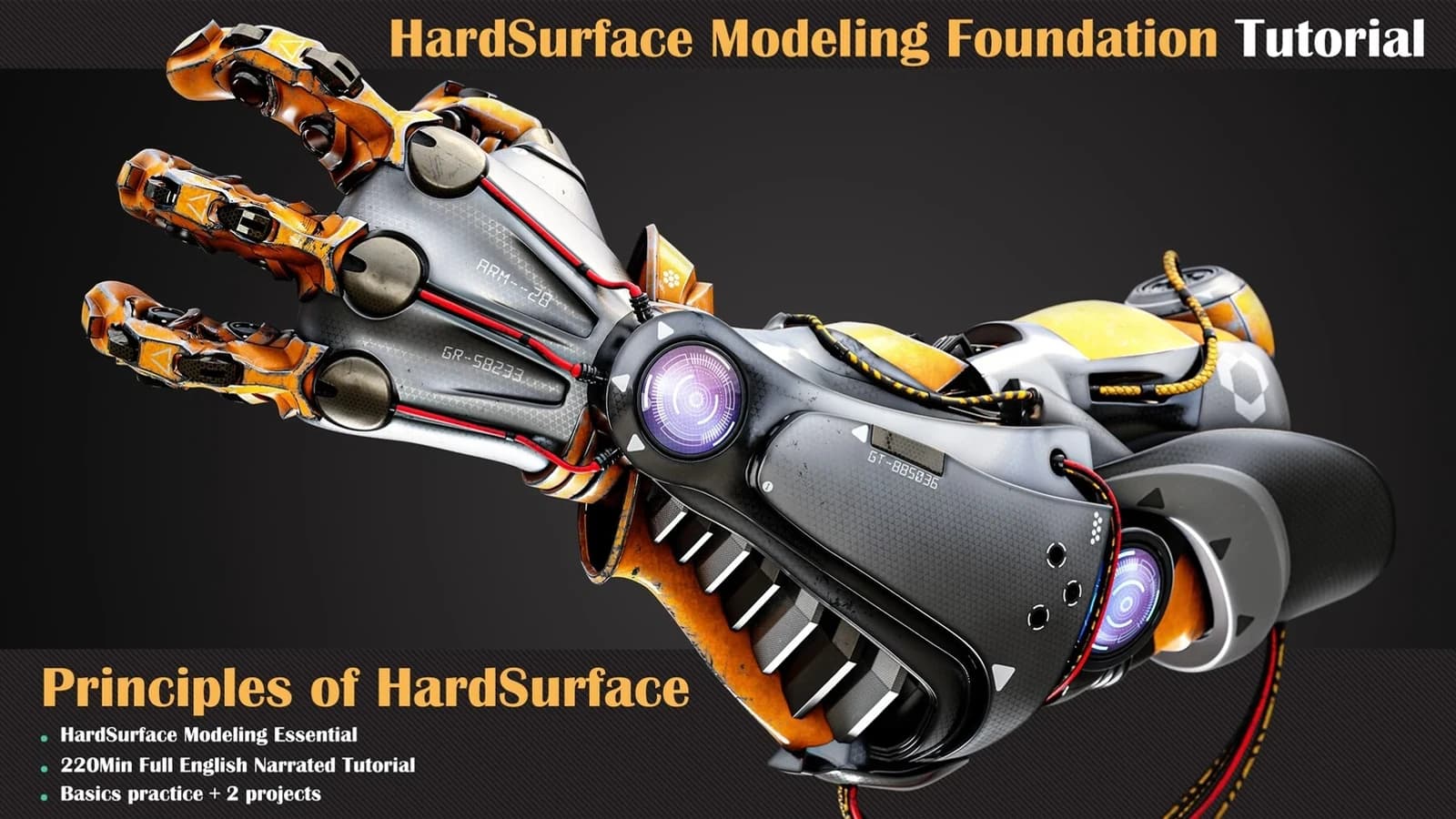
HardSurface Modeling Foundation Tutorial
Learning the basics of a job is one of the most important things to consider.
$10
Instant downloadVolume three sets the Hardsurface Tutorial Collection on a sci-fi helmet, modelled in 3ds Max from a 2D concept in 270 minutes of real-time capture. It is the tightest of the three volumes, which makes it the sensible one to judge the series on before committing to the longer builds.
A helmet is a compact hard-surface exercise with everything the discipline asks for packed into one prop: a curved shell that has to hold a clean reflection, hard panel breaks cut into it, and mechanical fittings that must sit on the surface rather than float above it. Four and a half hours is enough to see all three solved without any of it being skipped over.
Used properly this is a rebuild rather than a viewing. Open the concept, open 3ds Max, and follow the recording a step at a time — the viewport is the instruction, so watch the selection modes, the edge loops going in around each panel break and the point at which the shell is committed to a smoothing pass. Anyone working towards a game-art portfolio gets a second use out of it: the finished piece is exactly the class of prop a junior hard-surface reel is judged on.
You need to be able to navigate 3ds Max and use its primary functions; nothing beyond that. No project files and no finished model ship with the videos, so what you take away is the method and something you made yourself.
Each tutorial follows one asset from start to finish in real time. Every decision is explained as it is made, so you can see not just what was done but why that approach was chosen over the alternatives.
Learning the basics of a job is one of the most important things to consider.
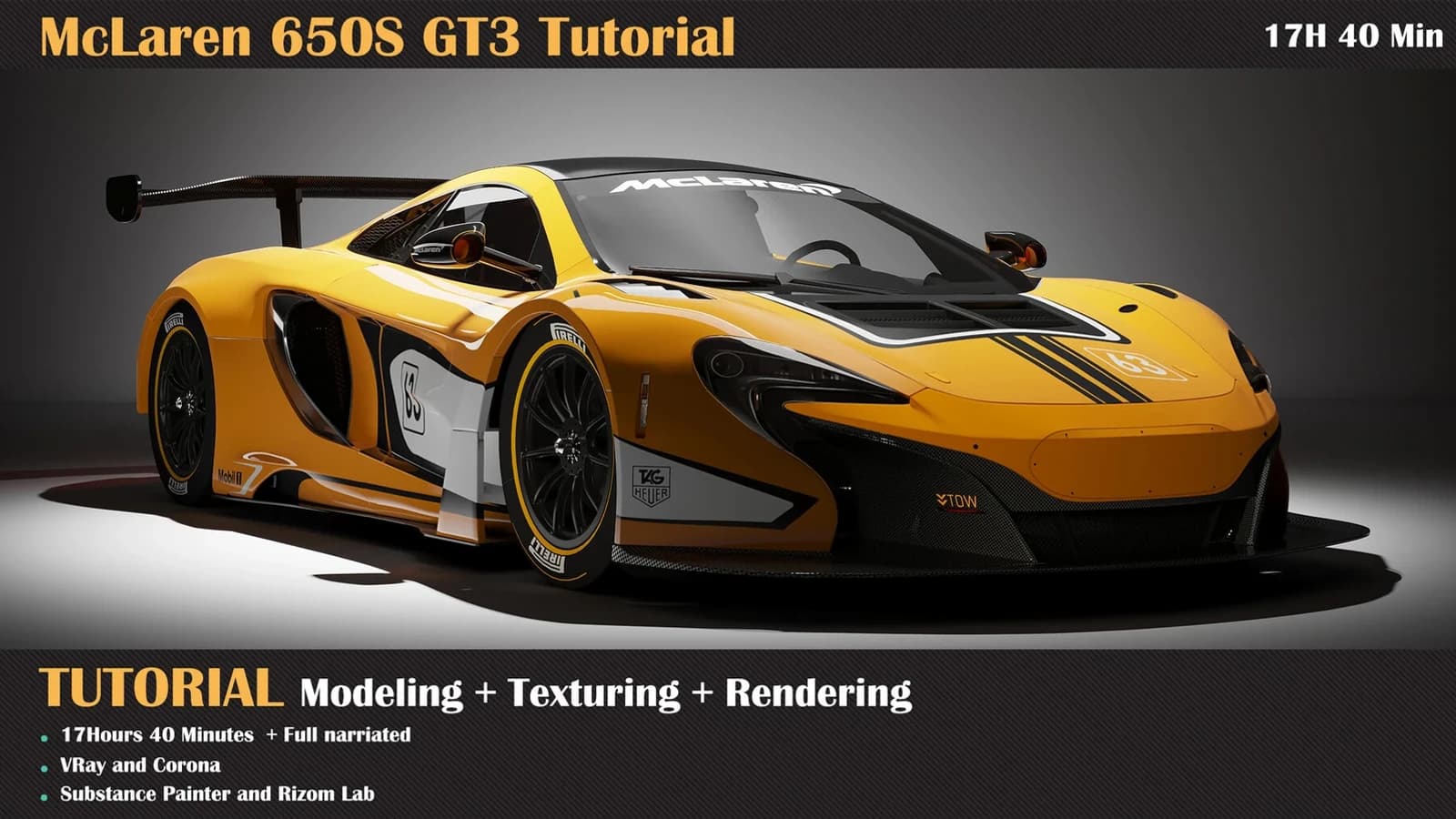
McLaren 650S GT3 Tutorial ( Modeling, Texturing, Lighting ). MP4 included. Built for Substance Painter and 3ds Max. Published November 2021.
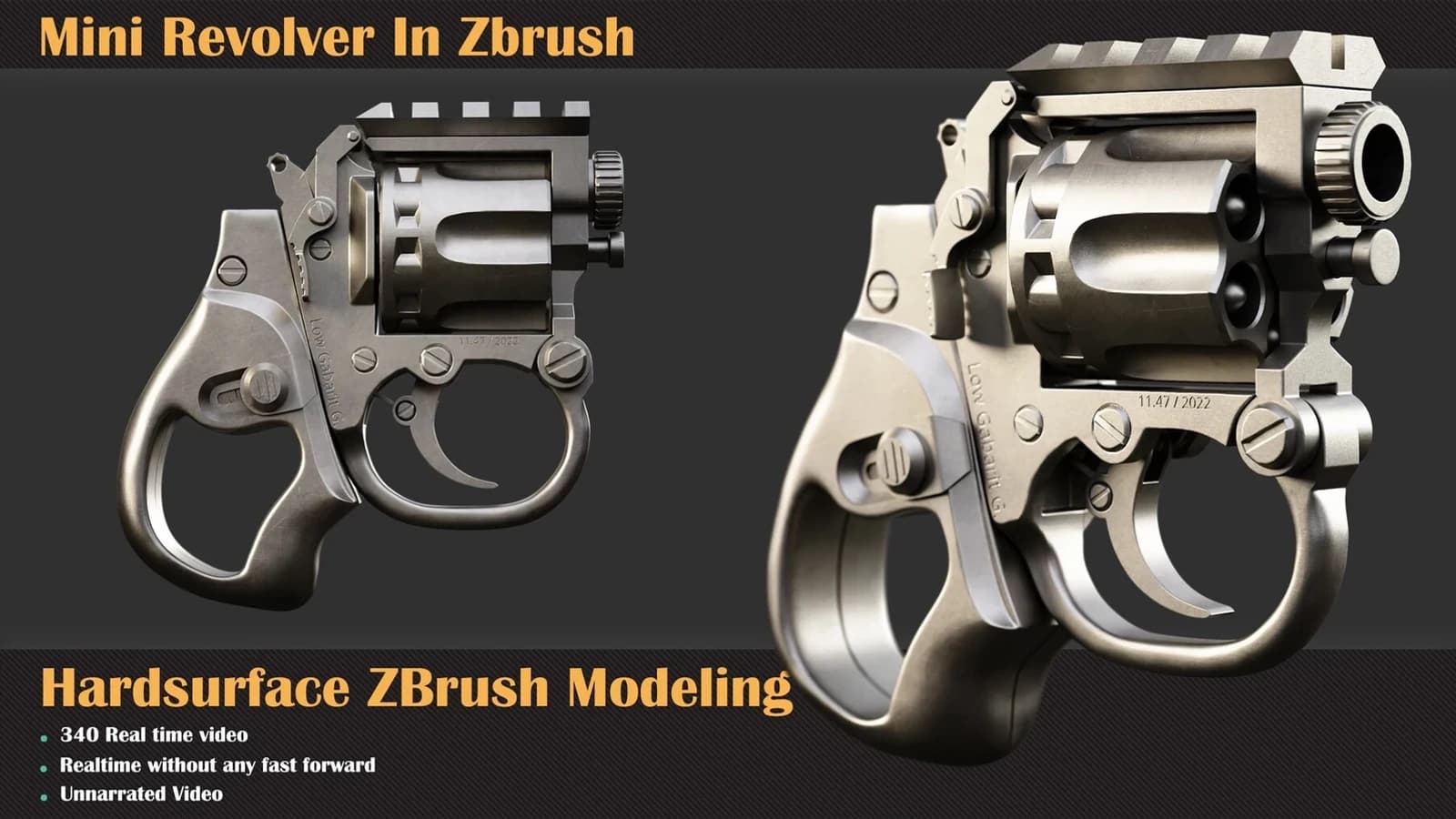
This product is the first part of the ZBrush modelling video process, and in the first part, we decide to have a Hard-surface model.
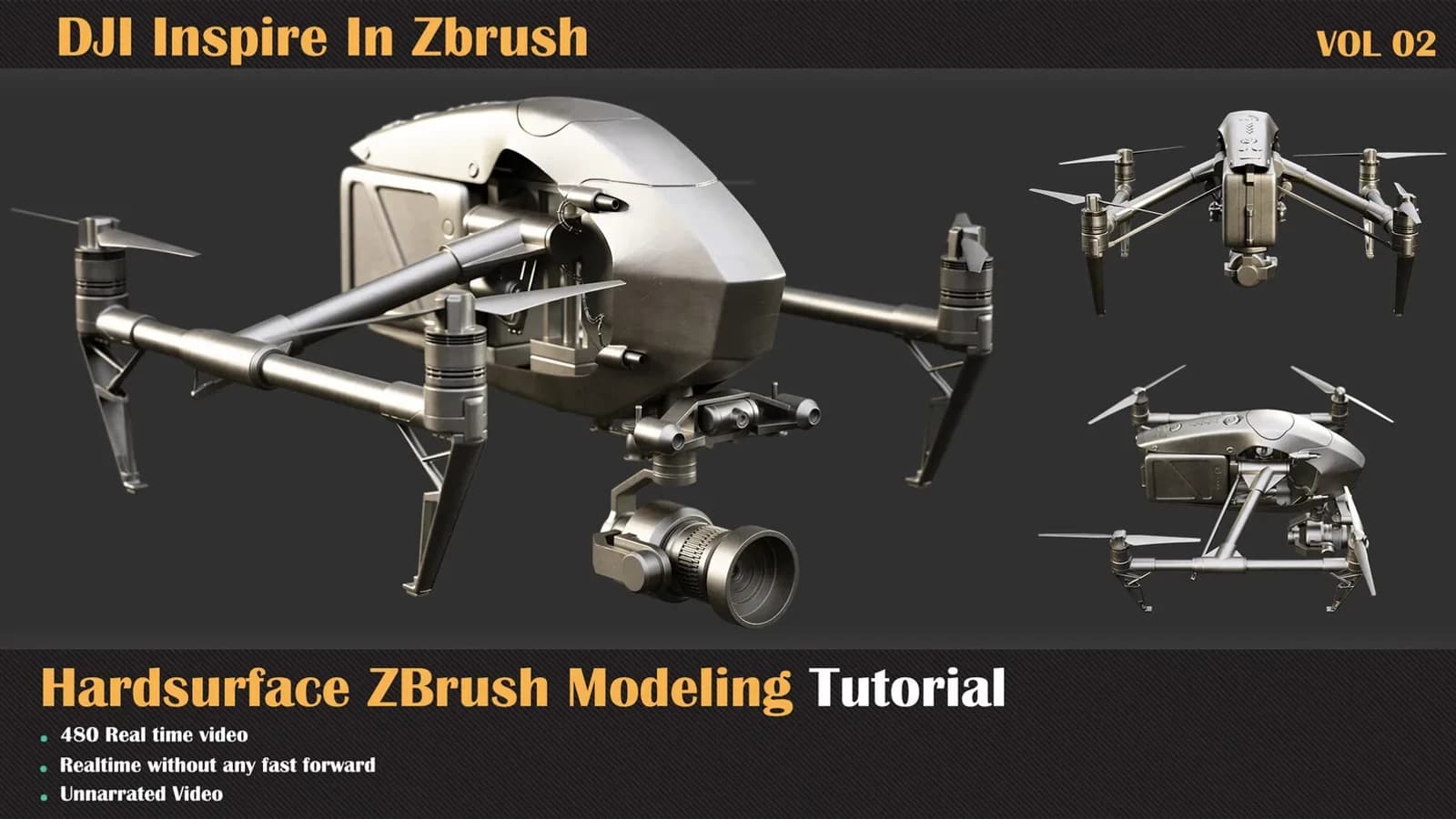
We will model a DJI Inspire Drone in the second section of the ZBrush modelling video process.