I have looked at a lot of portfolios. The gap between artists who get hired and artists who do not is rarely raw skill.
It is presentation and judgement. Both are learnable in a weekend, which is what makes this worth writing down.
1. Too many pieces
Twelve good assets is a worse portfolio than four excellent ones.
A reviewer assumes your weakest piece is your true level. They are not being unfair — they are estimating what you will produce on a Tuesday, and the weakest piece is the better sample.
Cut until it hurts. Then cut one more.
2. No wireframes, no texture sheets
Studios hire for a pipeline role, not for a picture.
Show the low-poly, the UV layout, the texture set and the poly count. A beauty render alone tells them nothing about whether you can work inside a budget.
This is also the cheapest thing on the list. The images already exist in your file. You are just not exporting them.
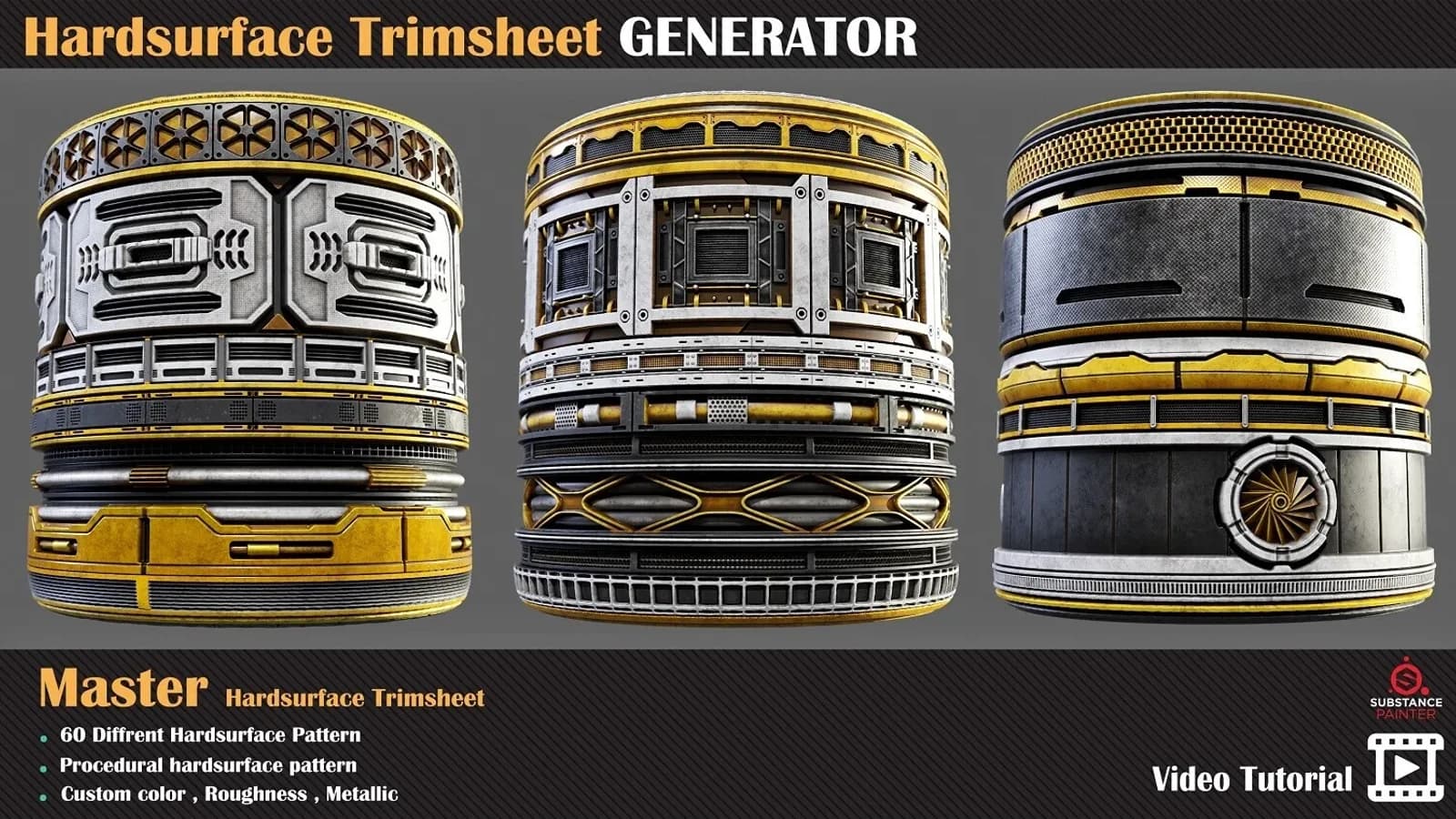
For an environment role there is a sharper version of this gap. It is the one that quietly ends applications: no trim sheet, no environment art job.
3. Lighting that hides the work
Dramatic rim-lit renders on a black background look great and communicate nothing.
Half the surface is in shadow. The reviewer cannot see the roughness variation, cannot judge the edge wear, cannot tell whether the metal reads as metal.
Include at least one neutral studio pass where the material reads honestly. Grey background, three-point light, no post.
If the asset only looks good in the dramatic render, you have lit a problem rather than solved one.
4. No context of scale
An asset floating in a void has no size.
A simple reference cube, a character silhouette or a ground plane instantly tells the viewer what they are looking at.
Scale is also the thing that decides whether your texel density is right, so showing it proves two things at once. A crate at the wrong density is invisible in a void and obvious next to a door.
5. Never finishing
The most common failure is a folder full of 80% projects.
The last 20% — the final polish pass, the presentation render, the breakdown image — is the part that demonstrates professionalism.
Finish three things completely.
What a reviewer actually does with your folder
Worth knowing, because it changes what you put first.
They open it, spend somewhere under a minute, and decide whether to keep looking. Not whether to hire you. Whether to keep looking.
So the first image is doing almost all of the work, and the last image is doing almost none. Most portfolios are ordered chronologically, which means the newest and best work is at the top by accident rather than by decision.
Order it deliberately. Best first, second best last, everything else in the middle.
The breakdown image is the one that gets you the interview
One image, showing the same asset four ways: high-poly, low-poly wireframe, UV layout, final.
It answers every question a lead has without them asking. It is also the strongest signal that you have worked in a pipeline rather than followed a tutorial.
It takes twenty minutes and almost nobody includes one.
Two things that are not mistakes
I should be fair about what does not matter as much as people think.
Using bought assets is fine, if you say so. A base mesh you textured is a texturing piece, and pretending otherwise is the only version of that which hurts you. Half of production works this way — that is what base mesh sets are for.
Following a tutorial is also fine, if the result is not identical to everyone else's. Change the subject, change the materials, change the shot.
Nobody objects to learning from a tutorial. They object to opening the same barrel from the same course for the fourth time that week.
Where to start if you only have one evening
Do these in order:
- Delete your weakest three pieces.
- Add one breakdown image to your best piece.
- Re-render one asset on a neutral grey studio setup.
- Reorder so the best piece is first.
None of that requires making new art. All of it changes what the folder says about you.
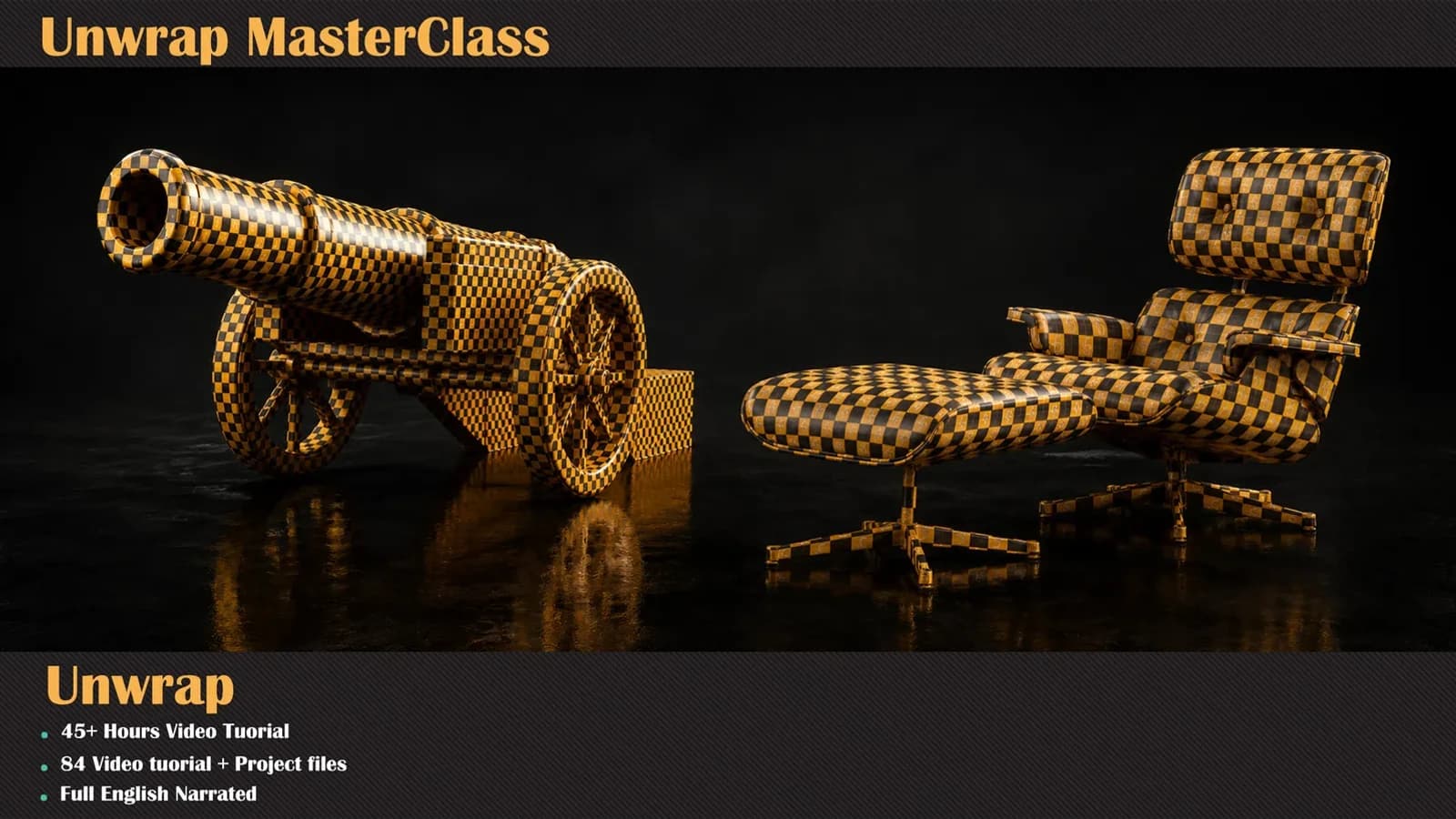
The skill under most of it is UVs. The wireframe, the texel density and the texture sheet all come from there — which is what the unwrapping course is for.