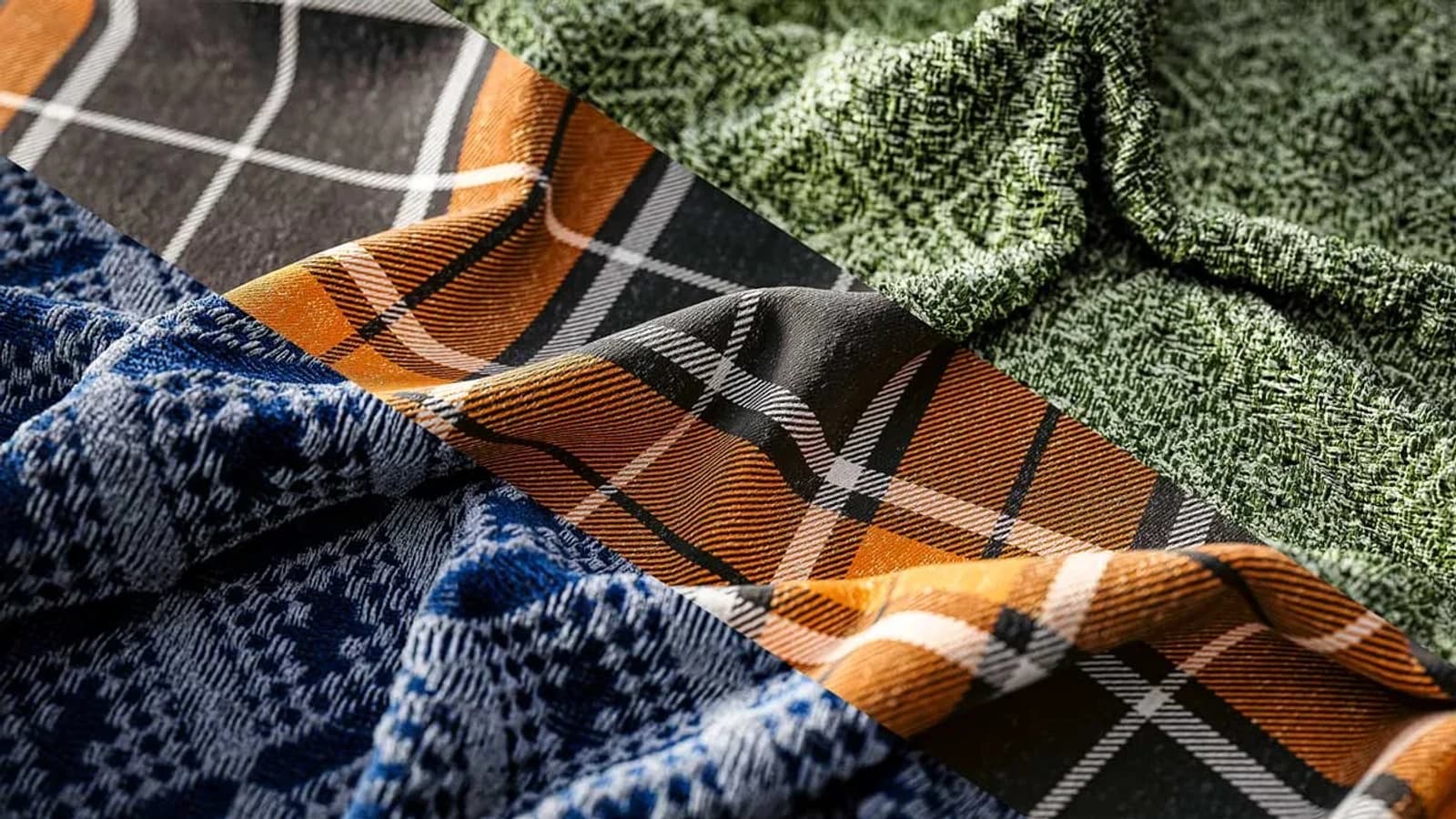
A scanned fabric photograph is a snapshot of one piece of cloth, at one scale, under one light.
Then the art director asks for a different colourway. Or a tighter thread count. Or the same jacket, worn out.
And you are back at the photo library.
I build fabric procedurally for one reason: the second request is always coming.
The weave is a rule, not an image
Cloth is one of the most rule-driven surfaces there is. Warp and weft, a repeat, a thread profile, a little irregularity.
All of that is a handful of nodes. Once the graph exists, the plaid becomes a different plaid by changing three parameters. The plain weave becomes canvas by changing thread thickness.
A photograph cannot do that. You can recolour it, and the moment you do, the shadows between the threads are still the wrong colour.
What actually changes between two fabrics
Four numbers, most of the time:
- Thread thickness
- Threads per centimetre
- The weave pattern itself — plain, twill, satin
- How irregular the threads are allowed to be
Twill is a plain weave with the crossing offset by one each row. That is the whole difference, and it is one node.
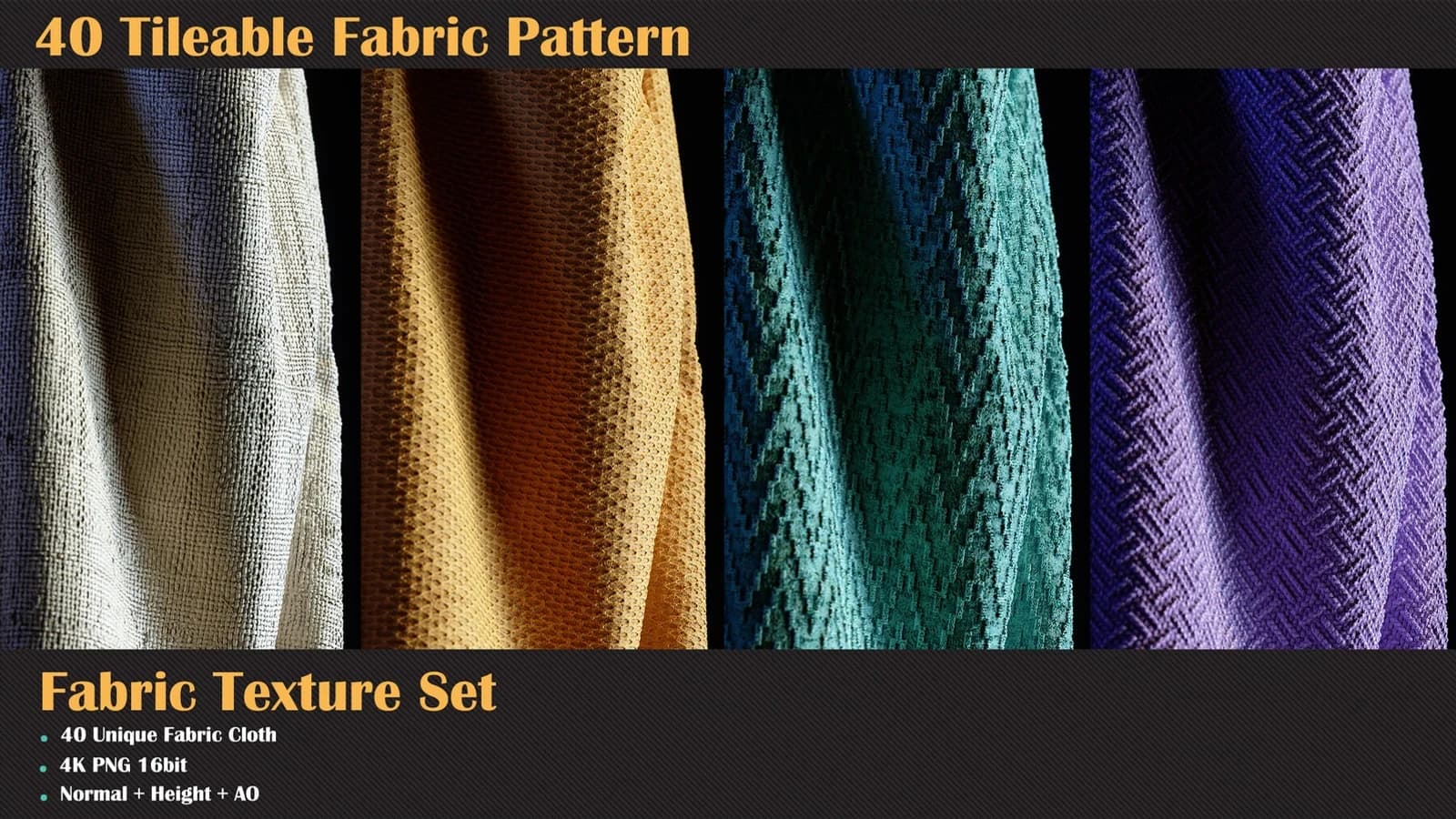
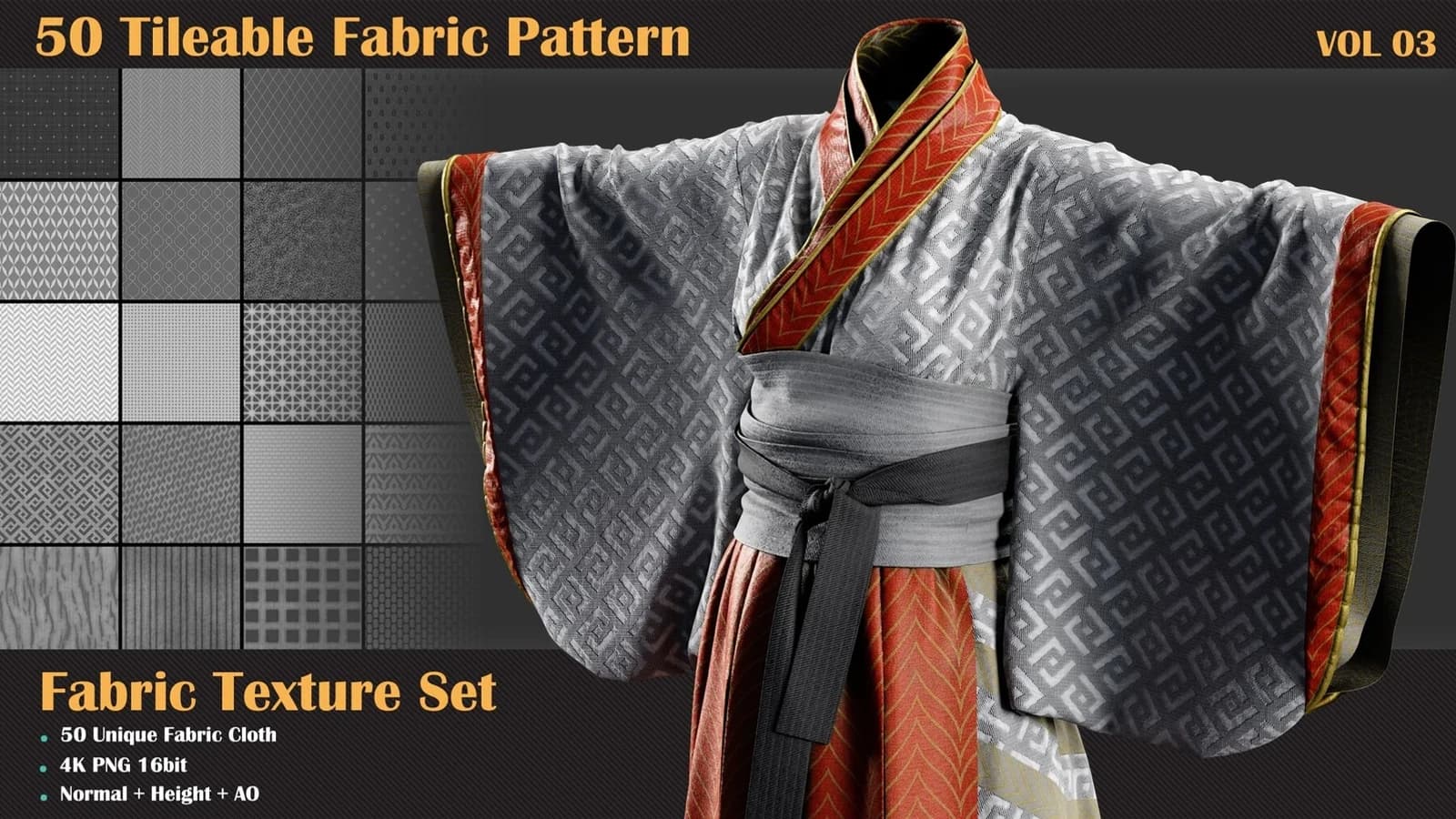
Which is why a procedural graph that makes one fabric usually makes forty. That is how the tileable pattern sets in my shop are built.
Displacement is what sells it
Normal maps flatten out at grazing angles, and cloth is almost always viewed at grazing angles. That is what a fold is.
Real height data, driven into a displacement or a tessellated preview, keeps the weave readable in silhouette.
It is the single biggest quality jump available to a fabric material, and it is also the one a scan gives you worst. Photogrammetry of cloth produces height that is mostly noise, because the surface moved between exposures.
Scale is the failure nobody catches
The most common fabric mistake I see is not the material. It is the size of it.
A denim weave authored for a jacket, put on a sofa at the same UV scale, reads as canvas. Same material, wrong thread count for the object.
Procedural fixes this in one parameter. A scan cannot be rescaled without either blurring or repeating, because the thread count was baked in when the photo was taken.
I wrote about the arithmetic behind that in why most of you should not use 4K.
The worn variant is where it pays for itself
Every garment in production eventually needs a second version. Worn at the elbows, faded at the shoulders, torn at the hem.
With a graph, wear is a mask driven by curvature and position, and the thread structure underneath stays correct where the fabric is intact.
With a photograph, you are painting damage on top of an image of undamaged cloth. It looks like damage on top of an image, because it is.
Where photos still win
Scans are still better for one-off hero surfaces that will never be rescaled or recoloured.
A specific antique rug. A branded label. A printed graphic where the design is the point and the weave is not.
Use them there. Build everything you will need more than once as a graph.
What this costs you
Honesty about the trade: a procedural fabric graph takes longer to build than downloading a scan takes to download.
The first plain weave is an afternoon. The fortieth is ten minutes, because it is the first one with different numbers.
So the decision is not "which looks better". It is whether this surface will be asked for again. If the answer is no, take the photograph.
The part that is not about fabric
This same argument applies to brick, to tile, to knurling, to anything with a repeat in it.
The question is always the same: is this surface a rule, or a specific object?
A rule should be a graph. An object should be a scan.
Cloth just happens to be the case where the answer is most often "a rule", and where people most often reach for the photograph anyway.
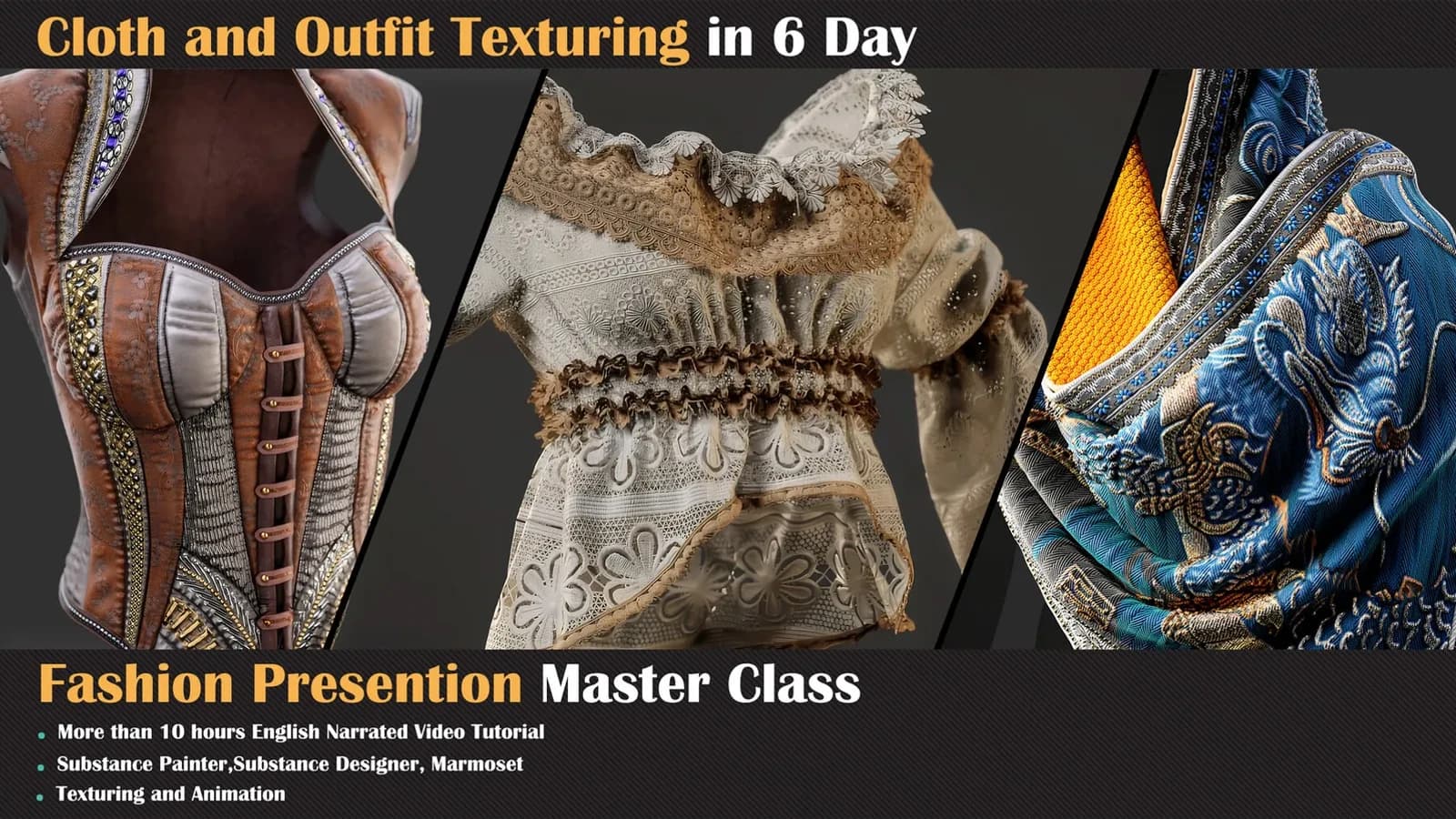
If you want the full build taught rather than argued, that is the Cloth and Outfit Texturing Masterclass.